Jesus Was No Sabbatarian

Luke 6:1-11 For purposes of this blog, a Sabbatarian is defined as a person who obstinately holds to the 7th day Sabbath command so much as to define who a true Christian is.  Jesus was no Sabbatarian.

In my experience as I have watched xCG’s they always have within their organizational walls those people who watch carefully to see who is breaking the Sabbath.  The Sabbath in Jesus’ time was the core religious belief, the identifying sign.  For the Pharisees the Sabbath was a complex set of rules.  Those extra Biblical laws they created resulted in the Sabbath becoming the worst day of the week.  In the Bible the 4th commandment, the Sabbath, was simple:  Keep it holy by no work.  That’s it. Simple.

The 4th commandment is silent about attending worship service.  Does that not imply 7th day worship service was a tradition or ceremonial?  And does that not imply worship should be a 7-day-a-week practice?  There is no command in the 10 commandments to go to synagogue or church on the 7th day, although that was certainly done by Jesus, and it was commanded in Leviticus 23.  Paul went to synagogue until Acts 18:6 when the Jews opposed him and blasphemed.  Paul shakes his garments and he says, “Your blood be upon your own heads…from now on I will go to the Gentiles.”  From this point forward Luke no longer records the Christian leaders going to synagogue on the 7th day Sabbath.

One thing that bugged me when I was in Worldwide Church of God (WCG) was that I knew I was a Christian because I went to church on the 7th day.  The 4th commandment is rest, not church attendance.  Yet my ticket to salvation was 7th day church attendance and rest.  That was my security.  That was my salvation – my obedience.  The other six days, I needed to live a moral life and be a good person.

Now read carefully, after Jesus heals another man on the Sabbath in John 5, Jesus says in John 5:39 to the Jews who sought to kill Him, “You search the Scriptures for in them you think you have eternal life.”  Stop right there.  I thought my security for eternal life was in Sabbath observance – that identified me as a child of God similar to how the Jews thought their eternal life was in the Scripture.  What does Jesus say?  And these (the Scripture) are they which testify of Me.”  The purpose of Scripture and Sabbath is pointing to the reality, the One who possesses and gives eternal life.  The purpose of the Scripture and Sabbath is to point to Jesus.  When we elevate either to eternal life security, we fail and miss the fulfillment; the Savior and the relationship with Him.

Jesus comes along, and He doesn’t just crush the extra-Biblical laws the Pharisees created, He uncovers their deceit by actually fulfilling the shadow of 7th day Sabbath observance and presents Himself as the reality and fulfillment of the shadow – the Lord of the Sabbath who says, “Come to Me all who labor and I will give you rest.”  This was prophesied in Isaiah 30:15.  You want true rest?  “Follow Me,” Jesus says.  Then your salvation will be a delight.  “The one who comes to Me, I will by no means cast out.”  “He who believes in Me has everlasting life.” (John 6:37, 47)

But Sabbatarians ask, doesn’t following Jesus require observance of the 7th day Sabbath? Herein lies the crux of the issue:  if you didn’t keep the 7th day Sabbath, you were not a true follower of God.  In the new covenant there is no problem resting or worshipping on the 7th day Sabbath.  If the Holy Spirit leads you to do that, you should obey the lead.  The problem exists in denying the work of the Holy Spirit and Jesus Christ in the lives of other people whose lives and work evidence fruits of repentance.  That problem was the same problem the Pharisees had – they could not, would not, let Jesus work in their hearts and minds because they myopically limited the very work of God.  They stubbornly and obstinately refused the work and life of Jesus Christ.  They held to their 7th day framework.  Jesus said, “you will know false teachers by their fruits.”  To deny Jesus and the Holy Spirit working in lives of sinners outside the 7th day observance, that is borderline blasphemy.  It is denying the work of God through Jesus.  It is the same sin the Pharisees had.

The Pharisees missed both the Savior (God) and God healing the man with the withered hand!  They overlooked God and the miraculous healing.  Why?  In order to differentiate and reject Jesus from themselves and their religion.  They denied the work of God in Jesus in order to protect themselves, their positions and their religion.  They had control and they were not about to humble themselves and lose it for God’s glory.  After all they were God’s people.  They followed Moses.  They were children of Abraham.  Yet, Jesus came and messed all that up and they would kill Him because they hated what He brought – God’s fulfillment.  They didn’t need Jesus’ salvation, theirs was secure in their religious framework, heritage, obedience and Scriptures as opposed to being secure in Christ.

What about you?  Have you missed the healing today – I’m referring to the spiritual healing of sinners outside the walls of 7th day Sabbath observance?  Is it because you refuse to acknowledge that Jesus heals spiritually outside of the 7th day religious framework?  Sinners lives are being dramatically changed.  If you deny Jesus works outside of 7th day observance, it’s not a simple mistake.  You are denying the very work of God Himself to draw people to Himself.  That’s dangerous ground.  The Pharisees did the very same thing – denying that God would even work in a sinners life.  Those sinners never measured up.  The Jews  could not answer the healings, but in turn they refused to believe Jesus’ work and miracles in other peoples lives so as to stubbornly hold to their history, heritage and framework.

Think about it.  When the early church received news of the salvation of Gentiles, the true believers rejoiced.  The problem came from those hypocrites and Pharisees who wanted to burden the new converts with requirements of circumcision, Moses laws, eating clean meats, and 7th day Sabbath observance (Acts 15).  Jesus is Lord of the Sabbath.  The Sabbath was made for man to point man to the true salvation rest found in its Maker, Jesus.  Jesus is the true, pinnacle fulfillment of the 7th day.  It’s Jesus who calls the shots on the Sabbath, not religious leaders or churches.  It’s Jesus who decides who is saved and He secures sinners.  Did He not say, “I will lose nothing” (John 6:39) and “neither shall anyone snatch them from My hand” (John 10:28)?

Don’t miss the symbolism in Luke 6:6-11.  This man’s right hand was withered, probably from paralysis.  The right hand represents the strength of a man, work.  It was withered.  The Pharisees watched carefully to see if Jesus would heal this man on the Sabbath.  They knew He could heal.  Was the paralysis healed on the Sabbath so the man could do Kingdom work?  It’s an interesting thought, but the text reveals Jesus did this healing defiantly, right in front of them as a witness and testimony of who He is.  The result was rage!  It got them mad enough to kill Him!

xCG’s always have within their walls those people who watch carefully to see who is breaking the Sabbath.  Why?  They don’t want to lose that identifying sign.  That sign is their security, while Jesus is minimized; secondary.  They cannot and some will not, see Jesus as their salvational security.  They essentially don’t trust Him.  “If I mess up, make a mistake, God is so harsh He may kick me out,” they reason.

Isn’t that the idea of the man who received one talent, who did nothing with it because he knew Jesus to be a hard man?  Matthew 25:26 Jesus says of this man, “you wicked and lazy servant.”  This man didn’t work, he physically rested.  His hand of work you might say was withered because he was paralyzed with fear of God as opposed to joy; obstinately holding to what Jesus had given him, hiding the gift and ultimately denying the Lord and Savior, the true Jesus.
Piper

Desiring God above His Gifts

Turn to Jesus, our true rest.  Leave your salvation in His capable hands.  He will cause you to rest, but also do His work.  If you are convicted by the Holy Spirit to observe the 7th day rest and gathering for worship, do so.  Just do not commit divisions, disunity and borderline blasphemy by rejecting the work of God amongst other Christians who follow Jesus within the Body and have fruits of righteousness and lives that glorify God.  This is what true atonement means – being at one with God because of what Jesus has done for us.  Jesus will never disappoint.  If Jesus were to ask you, “Why are you saved?” and you answer, “Because of my obedience,” you’ve got the cart before the horse and you’re resting in failure, for He is the power to repent, love and obey.
Some of the thoughts and ideas from this blog and it’s title come from John MacArthur’s sermon on this piece, as well as my own research and experience.  See http://www.gty.org/resources/sermons/42-70/

From Samuel: “How to Keep Your Faith in Time of Tragedy”

Regular blog readers here know about Samuel (see May 2013 Archives for the full story).  Samuel is a young pastor in Jinja who lost both his parents this past summer.  His mom and dad were brutally attacked during a break-in of their home back in May.  His father died that night and his mother lived for about two months and then she died.

I meet with Samuel weekly.  He does most of the talking when we meet.  Though hurt, his faith and confidence have been strong through these last few months.  I asked if he would be willing to write out his thoughts about how to keep faith in time of tragedy.  I will type his notes as he wrote them to me.  Here’s Samuel:

Why I lost my Dad in a murder by our own relatives inside the house at night on Saturday, May 11th 2013.  It was a horrible thing I have ever heard, and it was unbelievable at that time.  As I started to panic a lot but as soon as possible I realize my weakness by that time, then I rush with no words, kneeling down, and I ask God, please this is not normal God you know, but I need your strength and comfort.

But still there’s a lot of panic, and I started to speak of God’s attributes – e.g. God’s all powerful, all knowing, all wisdom, is Almighty God is loving, etc. and I started to gain my strength and sense by letting the Scripture speak to me more than my feeling – e.g. Psalm 139:1-6; 91:1; etc. which is the hardest thing to do at that moment.  But I have to accept the Scripture to tell me what to do, not my feeling.

And there I found my self encouraged and continue to stand on the ground still loving God and thanking God for all had happened.

So I had to overcome the fear, worry and the feeling of tragedy by seeing God through it, that nothing happens by mistake without God’s knowing.  Romans 8:27-30.

A month after my mother was also badly hurt in the night of the murder of my Dad, she also died and I had see my self standing on open ground of no one along side me.  Both have gone, who I had loved them so much because the truth is ever since I was born now 28 years of age my dad has never beaten me once [Note from Mark: parents beating, caning and even burning or cutting children as punishment is too common in Uganda].  And they were part of my life every day I live.

Really I have loved them to see the fruit of their labor on me but God in his plan did not allow what seem right in his sight to be done, for he is God, and in my mother’s death accepted God’s will to be done, but letting him be first in everything good or bad (Colossians 1:18).  Never won’t I allowed to be threaten by any storm (Psalm 23).  God is God.  I will trust him.

What encourages me is that my parents died Christians (born again) and they will continue living in Christ and one day God’s will shall I see them again.  Life is not [about] flesh that has died and rotten by our soul and spirit that no man has power over them except the author, our Lord God (Genesis 2:7).

So I overcome or deal with the tragedy of losing my two parents by:

– accepting God in all situations;

– letting God control every step;

– allowing God’s word to speak to me by telling me what to do in every situation, not feelings;

– running before the throne of God of mercy and love for comfort and encouragement, wisdom and victory over every situation.

The devil will use your weakness to put you down but God will use your weakness to lift you up in Grace and Mercy.  Be wise in time of any tragedy by having God’s mind (scriptures) for the devil is so close to you at that moment of tragedy (temptation, test), but remember the good LORD will never leave the situation beyond your strength (1 John 1:10).

Nothing shall obstruct me from the love of God (Romans 8:31-39).

Glory be God our Father in Jesus.

Samuel’s faith strengthens my faith in the Lord, and I trust his faith strengthened your faith as well.  God’s word supports us.  Thanks for reading.

Try Answering This Question…

Try something and see what you think.  This won’t take but a minute to do.  Get a Penpen, pencil or open Word on your computer.  Then ask yourself the following question, “Am I a good person?”  Answer honestly.  If you want to know what you really think, take a moment right now before reading further and write down your answer before continuing.  I’ll give you time.  Be sure to get it in writing so you can see how you responded later.

This week Michelle, Alexis and I went into Jinja town for some groceries.  As we pulled up, a charming young boy, about 8 years old, approached the vehicle and handed us a sheet of paper telling us about his background and requesting money for his elementary school fees – here in Uganda it’s up to the students to pay for their fees on their own, rather than the government taxing the adults’ paychecks.

As the young boy and I were standing under a small palm tree on Main Street outside the grocery store, I questioned him about his fees.  We were interrupted by an older male teen, whom I did not recognize.  This teen Henry (not his real name) knew me.  Months ago when we first arrived in Jinja, I had invited him to church, and given him my phone number.

About three weeks prior to this meeting on the street, Henry had started callingcell phone and texting me about medical and school fees.  He continued this almost on a daily basis, sometimes 4 or 5 times.  I could not remember his appearance and physical features, but he sure remembered me.

I must admit I was a bit irritated that he had called our phone for requests for money instead of visiting our church.

Henry greeted me with a very large and pleasant smile, which changed my irritation to a more receptive greeting.  This guy was a young, handsome kid and he proudly wanted to show me his recent report card – 19 out of a possible 20 points!  I acknowledged his good work and asked him what type career he was going to pursue.  He liked computer technology.

Henry quickly got to the point, asking again about me covering his school fees.  Instead, I desired to get to know more about him, and returned back to the topic of our original meeting a few months ago.

“Henry, are you a Christian?” I asked.

He smiled and assured me he is.  I then thought about asking him a probing question to determine where his faith rested.

“I want to ask a question,” I stated.

Henry seemed puzzled, but was willing to go along.

Suffice it to say his answer to the question failed.  His answer was like most people’s answer to the question when asked.  Henry gave many reasons for why He was a Christian, yet he failed miserably at the crucially most important answer.

I still gave him the benefit of the doubt, but wanted to explore further.  With his permission I then held God’s lawLaw up to him as a mirror.  “Have you ever lied, Henry?” I asked.

“Oh, no.  I never have!” came the surprising response.  I was quite astonished.

“You have never lied?” I continued.

“I have not,” Henry assured me.

“Not even when you were a boy?” I asked.  This guy is 17 years old.

He would not admit to lying.  “I think you are lying now,” I said, laughingly.  He chuckled a bit, but assured me again he has never lied.  Wow, not many people are that bold.

“OK, have you ever stolen anything?” I asked.

Henry thought for a few seconds.

“I did steal one time,” he replied.

“Only once?”

“Yes,” he insisted.

“Ok, what does that make you?  If you steal, even once in your life, what does that make you?  What do we call people who steal?”

I could tell Henry began to realize what my question implied.

“A thief,” he quietly and sheepishly admitted.

“Ok, have you ever disobeyed your parents?” I asked.

A few seconds pause and then, “Yes,” was the reply.

“What do we call a person who disobeys?”

Henry had a little more difficulty with this answer.  After a bit of time I tried to help him.  “Would you call that person a rebel?” I asked.

Again, he sheepishly answered in the affirmative.

“Henry,” I said, “you have just admitted to being a rebellious thief.”  In reality he is a rebellious, lying thief, but he honestly could not see that.

Henry was a bit taken aback.  So he naturally sought to justify his position, providing excuses.  We talked about this, but it only got worse.  He even (from his own mouth) claimed he was “not in the same category” as sinners.

My heart sank.  I had been giving the guy the benefit of the doubt about his faith in Jesus Christ.  But he clearly set himself apart from drunkards, drug addicts and other filthy type sinners.  He was not in that category he boasted.  Like the Pharisee in Luke 18, he was better than they were.  In fact Henry revealed to me his reasoning for this conclusion.  One of the reasons being, “I pray twice a day.”

In interest of time I won’t go into detail about the remainder of the discussion.  Bottom line, he could not see his need for a Savior.  I longed for him to recognize his eternal need, but he just could not see it.

As the rich young ruler, Henry walked away sorrowful.  He didn’t have great possessions, but Henry had an imposing idol that blinded him to the reality of his spiritual poverty.  His obedience sufficed in his eyes.

John MacArthur asks, “You want to cut the heart out of the church’s Gospel message?  Just convince the (listeners) that people are good.”  Most people think they are good, especially church going people.  James Boice quoted a Gallup poll revealing 75% of evangelicals believe man is basically good.

Try this yourself and see what responses you get from others, “Are you a good person?”

Now after reading the above story, how does your answer stack up?  In my experience most will somewhat sheepishly admit at first to making mistakes or doing wrong (almost never have I had someone use the word “sin”), but most will quickly follow up by saying something to the effect that overall their good outweighs their bad or they do their best.  The more arrogant ones will boast of their goodness.  Those who have difficulty with confidence or are down on themselves often will answer something to the effect, “I’m terrible” or “I’m really bad.”  And if the question is asked by someone else in a verbal conversation or chat the vast majority are so ashamed of Jesus they won’t even mention His name in response to a question about goodness.

Although some may generally refer to their belief in God in their answer, the apostle James warns about that, “You believe in God?  You do well, the demons believe, and they tremble.”

This answer is no small matter.  Not once in the conversation did Henry turn to Jesus.  Not once did he claim his need for a Savior.  In fact, the opposite happened.  As spiritually destitute as we all are, Henry’s pride got in the way.  He greatly erred by assuming he was in with God, based squarely on his goodness and probably somewhat his errant belief that God will somehow overlook his sin if he (Henry) means well.

My purpose here is not to condemn Henry.  If God saves Henry by His grace, then I am a blundering fool.  Thus let God be praised and me be a fool.  However, Jesus said, you will know a tree by its fruit; and from the heart, the mouth speaks.  My purpose is to use this real life example to point out how we can easily think we are resting in Jesus, when in reality we are ignorantly resting in our commandment keeping, obedience or good works.  No doubt those things are extremely important.  The Bible clearly testifies of the obedience of the saints, but true followers of Jesus are not ashamed of Him, nor are they resting in their works, obedience or commandment keeping.  They are resting in none other than their Savior, Jesus Christ.

Pride is a deceitful enemy.  It thoroughly permeates our being.  We get focused on so many peripheral issues.  We all have pride, but are we truly trusting and resting in Jesus Christ for our salvation?  Or are we trusting and resting in something else?  Anything else, even religious commandment keeping, is an idol.

If you believe or feel like you’ve failed and can’t make it, that’s the awesome Good News:  Jesus saves sinners.  The power of our salvation is not “doing” or “obeying.”  BibleThe power of our salvation is Jesus Christ, who causes us to obey and do from the heart.  Rest in Him.  Abide in Him.  Trust in Him.  Repent of your pride.  Accept Him into your life.  The result will be the power of salvation showing forth repentance, obedience, commandment keeping from the heart, and good works that glorify and honor God through our Savior Jesus Christ.  To Him be the glory forever and ever.

“The effort of liberal and borderline modernists to woo men to God by presenting the soft side of religion is an unqualified evil because it ignores the very reason for our alienation from God in the first place. Until a man has gotten into trouble with his heart he is not likely to get out of trouble with God.”

The Fear of God, AW Tozer

Work Permit Approved!

Earlier this past week my 2-year work permit was approved by the Ugandan government.  This allows me to stay in the country until we leave, probably at the end of next year (2014).

Bugembe Michelle

Michelle singing and dancing with the kids at church.

On Wednesday this past week Joshua and I travelled to Kampala to pay for the permit and leave my passport and Joshua’s passport with the government until tomorrow.  Tomorrow (Monday) I travel back to Kampala to pick up both our passports – his is a 1-year student pass, the max the government will give him. I will apply for 3 dependency passes for Michelle and the girls tomorrow while I’m in Kampala.

Bugembe Brittany

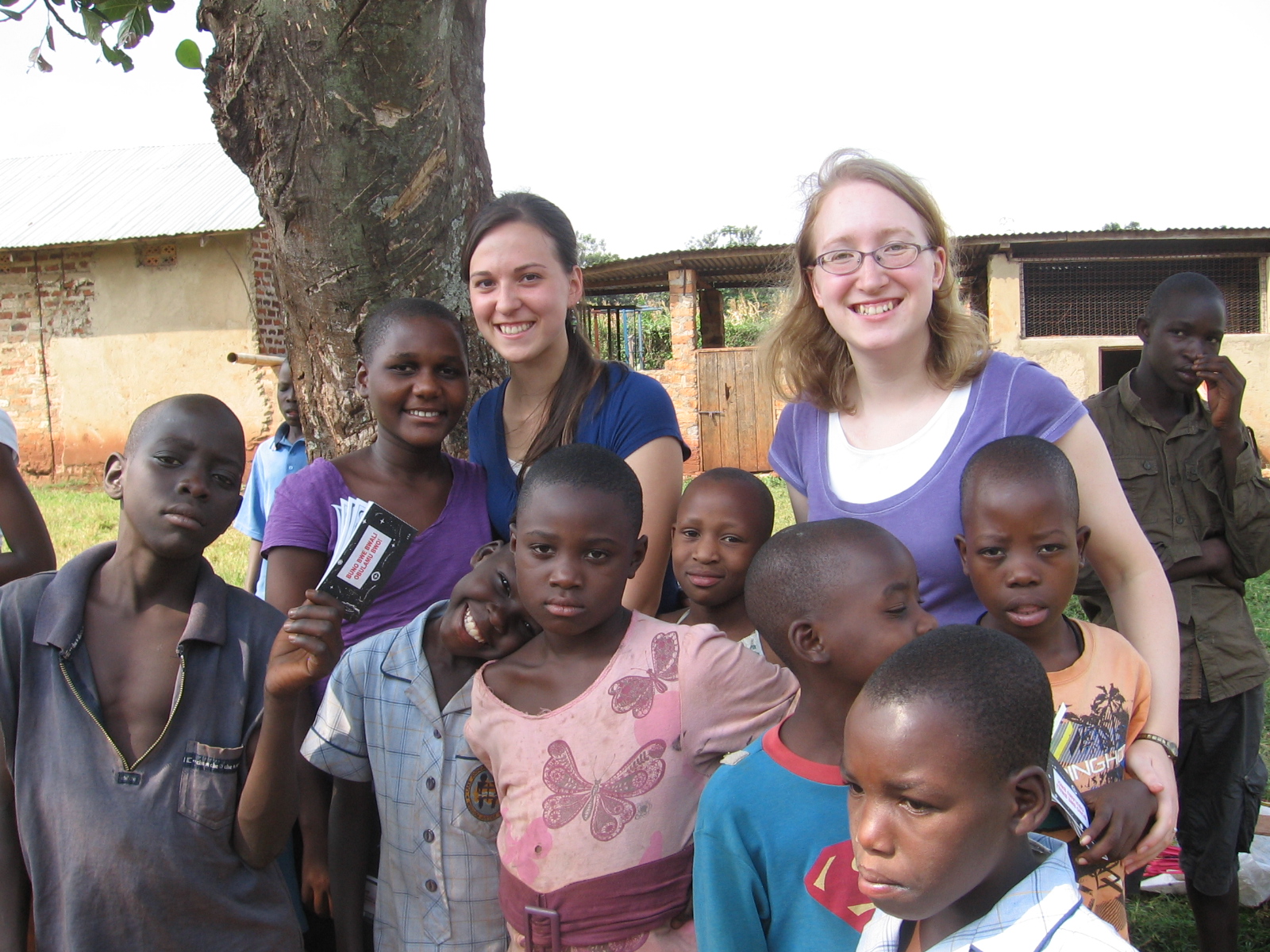
Brittany with kids outside Recovery Ministry in Bugembe.

In other updates, our family was invited to a neighbor’s church today, Recovery Ministries Uganda.  The neighbor (Pastor Mutekanga) asked me to speak for the sermon time.  This is a small, but vibrant African church in the town of Bugembe (Boo gahem bay), which is near the house we rent.  The entire family attended the service, as well as a special friend of our daughter Alexis, Andrew Olson.  Andrew leaves tomorrow to return to the States for seminary.  We were then invited to the pastor’s home, where his wife, Janet, served a delicious stew with rice, chapatti (grilled flat bread), and pineapple.  It was one of the best Bugembe Mark 2meals we’ve had since being here.

The week altogether was busy.  Other activities grabbed my attention this week, but perhaps I can write about those later.  This week I would appreciate prayer for my trip to Kampala, a monthly presentation I’m giving Wednesday to a group of about 30 pastors, and a Bible study I’m holding on Friday for teens of the church we attended today.

Alexis Bugembe

Alexis with children outside the church in Bugembe

Thanks so much for your prayers, love and support!

The First 90 Days…and Beyond!

CalendarThis past Tuesday we completed 3 months in Uganda!  Wow!  It has been a nice honeymoon period for sure.  There have been adjustments, but we’ve enjoyed the transition and we continue to enjoy it.  It’s amazing to see how God has gone ahead of each of us to prepare our hearts for this time here so that we could transition easier.

So I thought this would be a good time to review what we have been doing and what our plans are for the future.  I’ll cover Michelle and the kids first and then walk through the plans I see God revealing to me through our team members, Equip leadership and opportunities as they present themselves.

First, Michelle (in Luganda its mukyala wange – pronounced “moo cha lah” “wahn gay,” or “my wife”).  Michelle has mentioned to me that she believes the Lord is leading her to be a support and encouragement primarily to the missionaries who are here.  She is currently first and foremost a wife, mother and musomesa (or teacher), since she is homeschooling Josh.  She is also actively involved in language training, wrapping up participation in a women’s Bible study, meeting regularly with a missionary wife, planning to start a weekly women’s Bible study in August and assisting around the house with projects.  She is also providing leadership and training to the children, such as visiting a nearby orphanage that gets only the rare visitor. Image

The girls are in language training.  Josh dropped because he is finishing his second year of French at homeschool and he is picking up the Luganda language from the rest of us and Tugume (Too goo may), his 11-year old friend who is one of the Sperling’s children who stayed here with us.  The girls and Josh also visit the orphanage to interact, build relationships, play games and share about Jesus. IMG_6157

Like many older teens Alexis and Brittany are trying to determine what steps to take next after high school.  I am encouraging them to continue looking at special ministry opportunities and taking educational courses in the Fall.  Both help with chores around the house, assist with shopping at the market, baby sit, and tracking money, etc.

My plans and projects include:

1) Immigration papers secured for the family, my work permit and driver’s license.  The work permit and driver’s permit is currently in process in the capital, Kampala; less than a two hour drive away.  It is a slow drawn out process.

2) Language training – learning how to speak Lugandan.  This is a critical step in connecting with the local people.  They very much enjoy Americans learning their language.

3) Equip Uganda administrative activities such as setting up policies, procedures, reporting and following the goals and plans of the organization.  The team meets monthly to discuss our direction and to also hold each of us accountable and responsible.

4) Discipleship – currently I am meeting regularly with two young men – Samuel and Robert.  You know Samuel’s story.  Robert is 19 and currently unemployed.  It is very difficult in Jinja to get a job.  He had his first one and lost it he says because he got sick with malaria and was out of work for 2 days.  That is entirely possible here.  Like many youth in the States, Robert seeks nice clothing and money for status.  He is open to teaching at this point and even asked if he could come to church with us today – something we had tried to get him to do prior to him losing his job.

5) Opportunities and challenges as they arise – this has included getting to know neighbors, visiting at the hospital, building relationships, praying with folks, learning the culture – paying bills, buying and bartering, making application, setting up things, filtering water, etc.

6) Micro-Finance Teaching – This is an exciting development that started this past Wednesday with good feedback and success.  I was asked to teach classes as part of micro-finance training.  The audience consists of 10 – 40 pastors in Jinja, depending on who attends. The subject I chose was from the JobStart class I taught at Western Youth Institute (juvenile prison) in Morganton before coming here to Uganda.  I tie in Biblical teaching.  This looks like it will continue and I am excited about it.

7) Keeping up connections and reports with our supporters and donors.  Writing this blog, reports to Equip, contacting supporters through email, FaceBook or phone calls to provide feedback to folks about how God is making provision in Uganda.

8) Balancing money and Jesus – what does this mean?  One of the challenges I have written about on this blog is the balancing act and necessary wisdom it takes to know when to assist someone with money and how to introduce them to Jesus, especially when they think their church attendance and/or factual knowledge of Jesus is their proof of their Christianity.  I am asked for money regularly!  Perhaps as many as 15 – 30 times a week – from 40 cents US to more than $200.00 US.  This week I had two new and special requests: 1) one person in the government telling me to pay him almost $100 US for what the government Moneypays him to do.  I didn’t pay.  2) I got text’d and called during church today by one person at least 5 times trying to get about $10 from me for a medical clinic appointment.  At first I had no idea who this person was, then found out later it was a casual acquaintance I had made in town.

The challenge here is similar to the US, Canada and Europe, how do you get people to quit trusting in and desiring money to fulfill their needs, wants and problems and start really trusting in Jesus to the point of life change?  j0435912Their poverty is deep, and like a drowning person in the ocean, they will latch on to anything (especially American money) that will allow them to float for a few more seconds or minutes.  Money or Jesus?  Which sustains?  The reality is that Jesus and repentance is what we’re about and He will satisfy much more than money.  This sets us apart from the humanitarian volunteers here.

If I give money (and I do as I pray, think about the decision and/or sense God leading), one week or one month later, they’re back to needing money again. Our mission agency desires to “equip” them for sustaining support that comes from God through Jesus and practical day-to-day answers to their problems.  It’s a balancing act that I don’t do a very good job with at this point.

9) Visiting the slum – this should happen in August as Jeremy desires for us to take our time before introducing us to that area.

That’s our ministry so far.  We have much more to learn.

Samuel Loses His Mother

It is with heavy heart that I update you about Samuel, the young pastor I met in May and wrote about on my blog here, “They were…slain…”  I just hung up the phone with Samuel and he is so overwhelmed.  His mother just died about an hour ago.

Samuel had asked if I could come by and see him this past week.  So I had stopped by to check on him at his job as security guard at the place we stayed after first arriving in Uganda.  He and I talked for a little less than an hour.  He said his mother had fallen and the doctors had found cancer.  He had other pressures of life hitting him, too.  Yesterday he called to say they were taking her in for surgery and asked me to pray.  I was on the way to Kampala on a bus, but assured him I would pray.  He visited with her at the hospital today, left for the night to come home and they called him to let him know that she had died.

The pressure on Samuel is heavy at this time and he needs your prayers and would appreciate them.  He has now lost both parents in less than 3 months of each other.  He told me he sold land in order to pay his mom’s hospital bills and his dad’s funeral, along with normal expenses.  Many pastors here do not have income from being a pastor; they have to work, which Samuel does.

I plan to stop by tomorrow (Saturday) when Michelle and I go into town, but he was unsure if he would be at work.  I may not be able to see him until he returns from the funeral.  Your prayers are appreciated for him.

What Does Jinja Remind You Of?

The city of Jinja rests at one of the northern points of Lake Victoria.  We can see the lake in the distance from the house we rent.

The city was founded in 1906 and has a current population of at least 80,000 at night. It is estimated that the population during the day more than doubles, some official estimates are as high as over 200,000. It is Uganda’s second largest city.  Sources vary on the average income in Jinja between $100 – $500 US dollars per year.  Per year, not per day or month.

IMG_6023

Bujagali Falls on the Nile River, to the North of where Ripon Falls used to be. Ripon Falls is now covered by water due to a dam being created on the Nile in 1954. Jesus said if we believe in Him, out of our hearts would flow rivers of Living Water, which He said was symbolic of the Holy Spirit.

Jinja is the “Source of the Nile” – the place where the Nile River begins flowing from Lake Victoria towards Egypt.

Years ago large rivers like the Nile separated people groups, formed some protection from enemies, but also hindered trade and forming of relationships. But here in the Jinja area near the source of the Nile, large rocks created a pathway across the large river near Ripon Falls.

IMG_6003

The Nile River north of Jinja. This photo is taken looking to the south toward Jinja and Lake Victoria. The lake being just over the mountain in the background.

Because of this rocky path the place was named Jinja, a word which comes from the two tribes, Baganda and Basoga, on either side of the Nile. In both tribal languages the name “Jinja” means “rock.”

This history of the Jinja area has deep spiritual symbolism. In a number of places in the Bible God and Jesus are referred to as a rock and the rock of our salvation (Deut 32:15; 2 Sam 22:47; Psm 95:1; Matt 7:24; etc.).  In the New Testament Jesus also said of Himself, “I am the way” (John 14:6) or path.  Our sin separates us from God and the only way or path to an initial and ongoing relationship with God is the Rock of our salvation, Jesus Christ.  Jesus said, “No man comes to the Father, except by me.” (John 14:6).

Additionally, Jesus said He was the source of eternal life and the Holy Spirit (John 4:11-14 and 7:38), metaphorically illustrated in the Bible as (rivers) of living water.

Living in Jinja reminds us of the insurmountable and impossible task of trying to overcome the oppression of poverty and sin, but more importantly Jinja reminds us of the true answer to life’s problems, the refreshing source of living water, the Rock of our Salvation, Jesus Christ.

Update on Accident #2, Boda Driver

Followed up early this afternoon by making a visit to the hospital here in Jinja to visit the boda driver who was hit by a van in front of us last week (see story at 2 Accidents This Week).  I have not shared his name because of privacy and the fact that our visiting and his responses could lead to possible harm to him due to his profession of faith in Jesus.  I just want to be safe.

We last visited Saturday when he was still in pain and vomiting, though he had improved and was receptive to prayer, anointing, reading of Scripture and our visit.

When Andrew and I walked in today, both the boda driver and his roommate were sitting up.  When both saw us, both had a big smile and both extended their hands for very warm handshakes.  The boda driver showed us his injuries, which over the weekend had healed quite nicely.  He had no more vomiting, no more pain.  The deep cuts looked incredibly good.  His roommate was sitting on the side of the bed – this was the first time we had seen him sitting up – and clearly on the mend.

Both men were so thankful – they allowed us to read more Scripture, pray, and shook our hands at least 3 times each (all with big smiles).  And both were going home from the hospital today!  Praise God!  Jesus is AWESOME.

It is such an encouragement to see when this kind of healing happens.  It’s not as often as I would like, but it is so encouraging!  These men and their families were simply ecstatic when we left and wanted to share their phone numbers with us.  The one man said he wanted us to come to his house later.  The most important thing is that God is glorified and that these men and their families put their trust not in healing, but in the free gift of God’s Son, Jesus.  One professed to be a believer last Friday.  Now both profess to be believers, and the one that believed before seems to have had his faith strengthened.  It is my prayer God will continue to strengthen both of them in their faith and walk with Him.

Two Accidents This Week!

Two accidents this week which happened around me/us:

IMG_6104

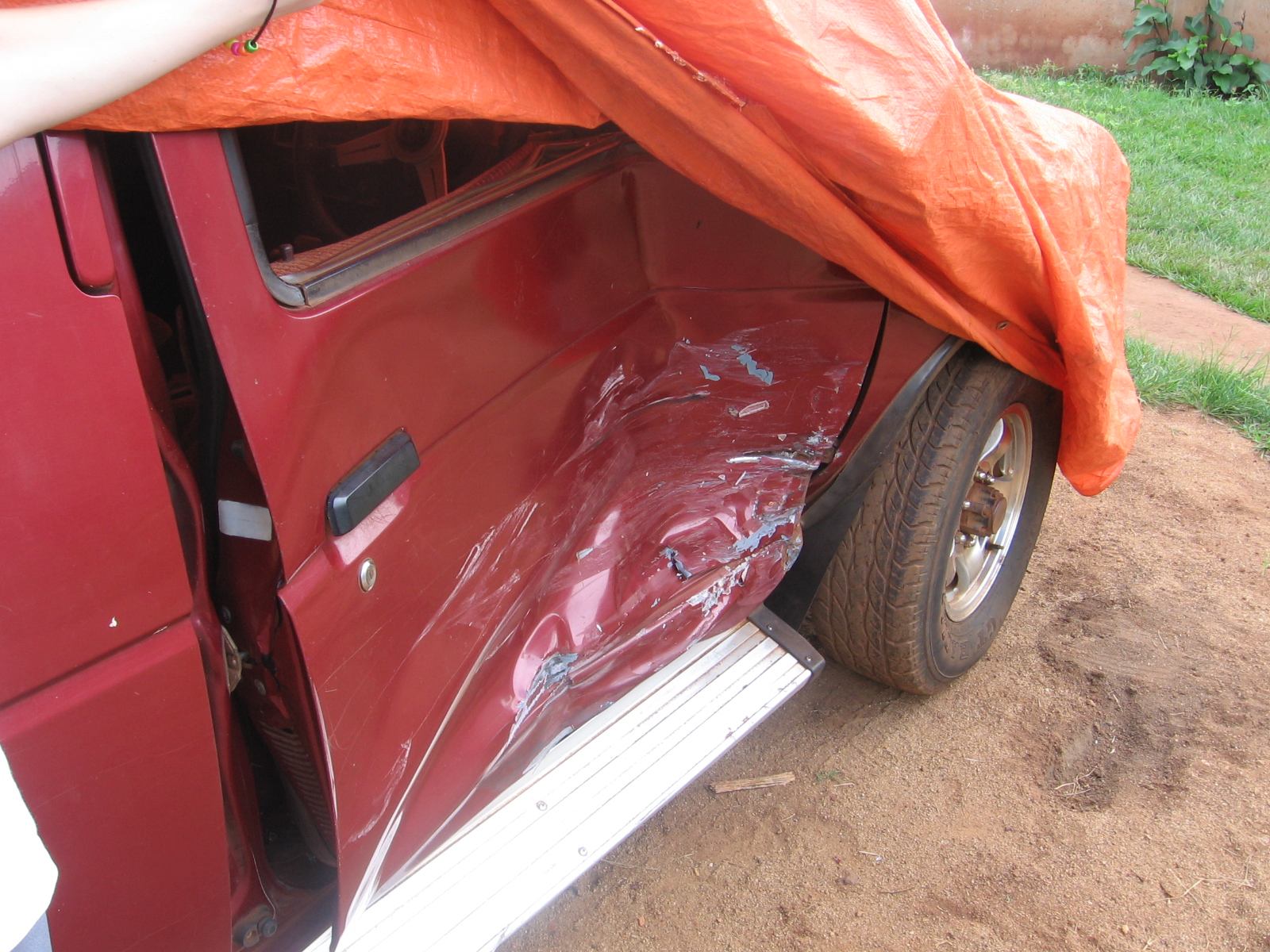
Direct hit to our friend’s door on the driver’s side. Remember driver’s side of the car is on the right in Uganda.

1. Sunday night after a home Bible study, we were driving home with a missionary friend, his wife, family and 3 interns packed in his car following us in the dark.  They were T-boned in the driver’s side of their car.  The driver, which was the husband / father, had only minor injuries, which Michelle was able to assist with and provide some simple nursing care (thanks to MMI training).  No one else in the vehicle or the other vehicle was hurt, just a bit sore.  Thank the Lord our Bible study group had just prayed for God’s protection.  Something that could have been much more tragic resulted in only very minor injuries. A 3-year old son, who was in the car during the accident, said right after it happened, “God was in between our car and their car.” He is so right.  The car has since been repaired.

2. Then today (Thursday morning here about 9 am) in Jinja on busy Main Street, the same missionary was with me when a boda boda (motorcycle) driver was hit by a van.  I witnessed the entire accident.  I was shocked as I heard the awful crunch and saw the man on the boda thrown to the ground mercilessly.  We ran over to help with such a heavy heart for this man.  I can still hear the sound of the impact.  I wanted to do something, but felt helpless.  As I arrived, the van took off (otherwise the driver of the van would probably have been beaten badly or killed by the crowd) and a fellow boda driver picked up the injured man and carried him to the sidewalk.  I squatted by the man, placed my hand on his shoulder and prayed for him.  He sat dazed and bloody with a long, large, deep gash in his right leg, blood on his forehead, shoulders and other parts of his body.  I then realized a very large crowd was gathering while men (and one Muslim man in particular) were yelling in Luganda (which is normal after an accident here).  I began to feel unsafe.  I noticed the fellow missionary with more experience standing at a little safer distance watching.  I thought, “I better leave.”  I joined my friend and we recounted the experience.   The boda drivers picked the dazed and injured man up and put him on a boda and drove him to the hospital.

A snapshot of Main Street, downtown Jinja.

A snapshot of Main Street, downtown Jinja. The accident on July 11th happened just in the distance of the photo (left side), about a 1/2 block away. Photo was taken during a quiet time on the street. It’s normally much busier.

Bodas are everywhere in Jinja, hundreds of them weaving in and out of traffic.  Boda accidents happen all too often here.  This man, like the majority, do not wear helmets.

Once again, I found myself feeling helpless, so helpless, and wondering what to do in such a difficult situation, similar to the situation of the girl on the bus who had a seizure (see my previous blog entitled, Do You Ever Want More? June 16, 2013).  I thought of the driver often throughout the day today and prayed for him.  I hope and pray he will be fine.  Life is so fragile and comes at us unexpectedly.  Thanks for your prayers, especially this week!

UPDATE (Friday, July 12):  Friday afternoon I went to Jinja Main Hospital to visit the boda driver.  He was in the same ward and the same area as Musisi, the man I visited and witnessed to when we were here 3 years ago.  3 years ago, Musisi accepted Jesus as his Savior.

Today, I found out the boda driver in the accident yesterday is part of another religion, too.  I met him and found out his name.  He does not speak very much English at all.  His family was there to support him and his wife just kept smiling at me.  They really enjoyed it when I was able to speak just a little Lugandan to them.  People generally see it as a sign of respect when a white person tries to speak their language.  I was able to let the boda driver know I witnessed the accident, was concerned for him and prayed for him.  At first he seemed resistant to my visit, but he warmed up as time went on.  His brother translated for me as we chatted.

I won’t go into a lot of detail, though I would like to.  By God’s grace I was able to talk, pray and it seemed the Lord’s Spirit encouraged him. I shared that Jesus was the reason I came, that Jesus changed my life and asked him to thank Jesus, not me.  I told him a couple times that Jesus loved him and that’s why I was there.  By the end of the conversation, he was opening up and seemed happy that I came.  His wife was very appreciative of the visit, and just kept smiling.  I just wanted to hug her as it seemed we connected.  She was holding a baby.  I hope to visit more and talk to him further.  He is supposed to be in the hospital for about another week.  Please pray for him.  His roommate is an older Protestant gentleman.  Families in the hospital here support one another openly.

As I was leaving the hospital, walking across the compound, I was encouraged.  However in the distance I heard the wailing of a girl.  As I approached a large truck on the way to my vehicle, a girl was in the back of the truck loudly crying and being consoled by a person who seemed like her mother.  A group of about 10 men were standing in a circle in a serious discussion.  Not sure what was going on.  So many needs.  So much hurt, pain and oppression.  The world needs Jesus – not religion, not legalism, and not for you and me to remain quiet.  They need to know He loves them and gave Himself for them.  When that happens, the world changes.  People watch and listen when they are in need.  May Jesus cause us to share His love more and more.  Let’s go!  And make disciples.

UPDATE #2 (Saturday, July 13): I visited the boda driver (we’ll call him William) again this morning at the hospital.  This time I took along a young man, Andrew Olson, from Minnesota who is here doing Bible Translation.  “William” was much more receptive today.  He sat up when we arrived.  His roommate’s spouse said “William” was vomiting this morning, maybe from a concussion.

Andrew was able to read from Psalms 23 and James 5:14 out of the Lugandan Bible.  William was receptive.  I was able to pray for William, and Andrew anointed him.  William’s roommate’s spouse asked that we pray for them, which Andrew did.  Then another person came from across the hall and asked us to pray for his son John, 21, who was in a vehicle accident.  We did and Andrew anointed him.  Then a man who was the roommate to the 21 year old, asked for us to pray with him.  We did and anointed him, too.

People here are not only receptive and open to prayer, but request it of people who are visiting others.  Their hope is still in the Lord for healing.   Here in Uganda, people desire prayer.  They are not embarrassed, ashamed or consider it a “private” matter.  They are desperate, yet sincere and openly appreciative of it, with smiles and warm handshakes.

Lifestyle Change

Moving from the US to Uganda has its joys and challenges.  To provide a better picture for you of what it means to us, I thought I would share some of the changes we are experiencing.  We are enjoying some of the changes and taking others in stride and handling things relatively well.  The kids are doing fantastic, though Josh has had a bout with gastroenteritis a couple days this past week.

Electricity – The World Bank reports that in 2009-10 about 12% of households in Uganda use electricity for lighting.  I’m sure the rate is much higher in Jinja and higher now, three to four years later.  Our Equip team member Chris Sperling, hooked his house up to the grid one week before we arrived here.  It’s a very nice gift.  He had used only limited solar power prior to that – mainly for lights, a couple outlets to run a computer, charge a cell phone, etc.  The electricity does go out about once or twice every few days for a few hours, but the only real challenge with that is that the city water is dirty afterwards (looks like milk).

The house we are in is nice.  As far as American essentials however, it’s a change.  Not bad, just a change.  There is a small butane cook stove, but no oven.  There is no hot water, no crockpot, no washer, no dryer, no microwave, no toaster, and no air conditioning (although there is a wonderful breeze off the lake).  We do have fans.  We bought a small fridge (a bit larger than a dorm fridge) this week and we think we have moved up in life – we have a way of storing leftovers and cooling our water now. Most food is normally cooked outside over fire Outside Kitchen(see photo for picture of our outside kitchen – looking closely you can see the two fire cookers on the floor).  We have come to appreciate all the appliances in the US.  But in place of the appliances and of much greater value are the two workers who worked with the Sperlings, Ruth and Kate.

IMG_6097

Dinner Together

These two ladies work hard keeping the house in order: cooking, cleaning and doing laundry.  We pay them the salary the Sperlings paid and they receive room and board, along with their needs being met.  They cook daily for 8 – 11 people here at the house.  Michelle and the kids assist with shopping at the market or grocery store, doing dishes, cleaning, some cooking (since cooking on fire is not our forte) and other tasks.

Washing clothes is an adjustment.  We hand wash, air-dry and iron our own personal items.  Ruth and Kate iron the majority of the clothes to kill mango worms – the mango fly can lay eggs in the clothes, which then hatch and the larvae burrows into a person’s body as a parasite – not good and very gross (videos of mango worm extraction are on Youtube)!

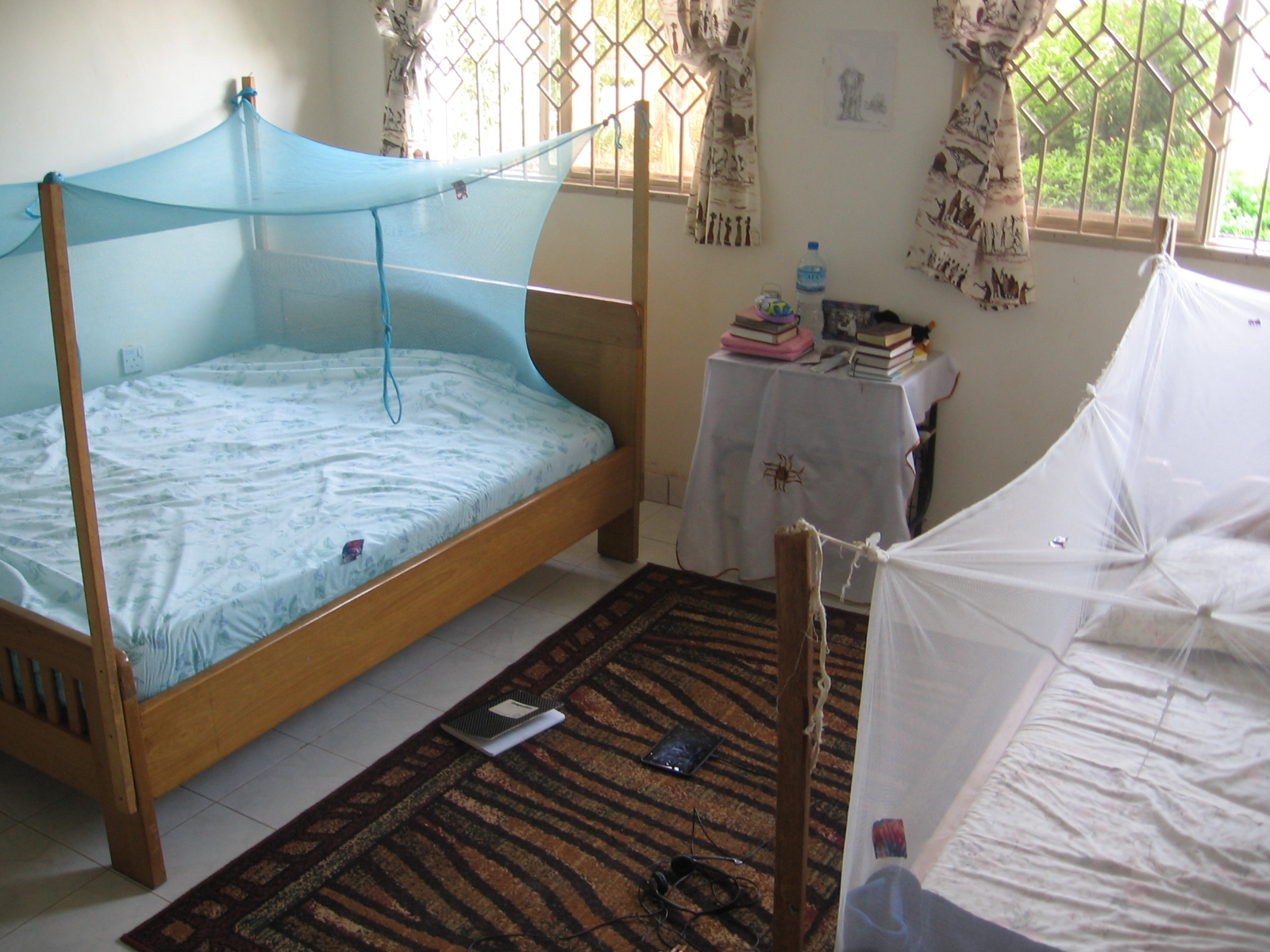
Showers are cold (no hot water) and are usually taken in the afternoon or at night since the water will warm during the day and is therefore more tolerable.  Beds with Mosquito NetsMosquito nets serve as protection to reduce the chances of malaria, as well as keep the various critters off of us at night (photo of one of our rooms, beds with mosquito nets).  We plan to install mosquito screens on most windows by the end of this month.

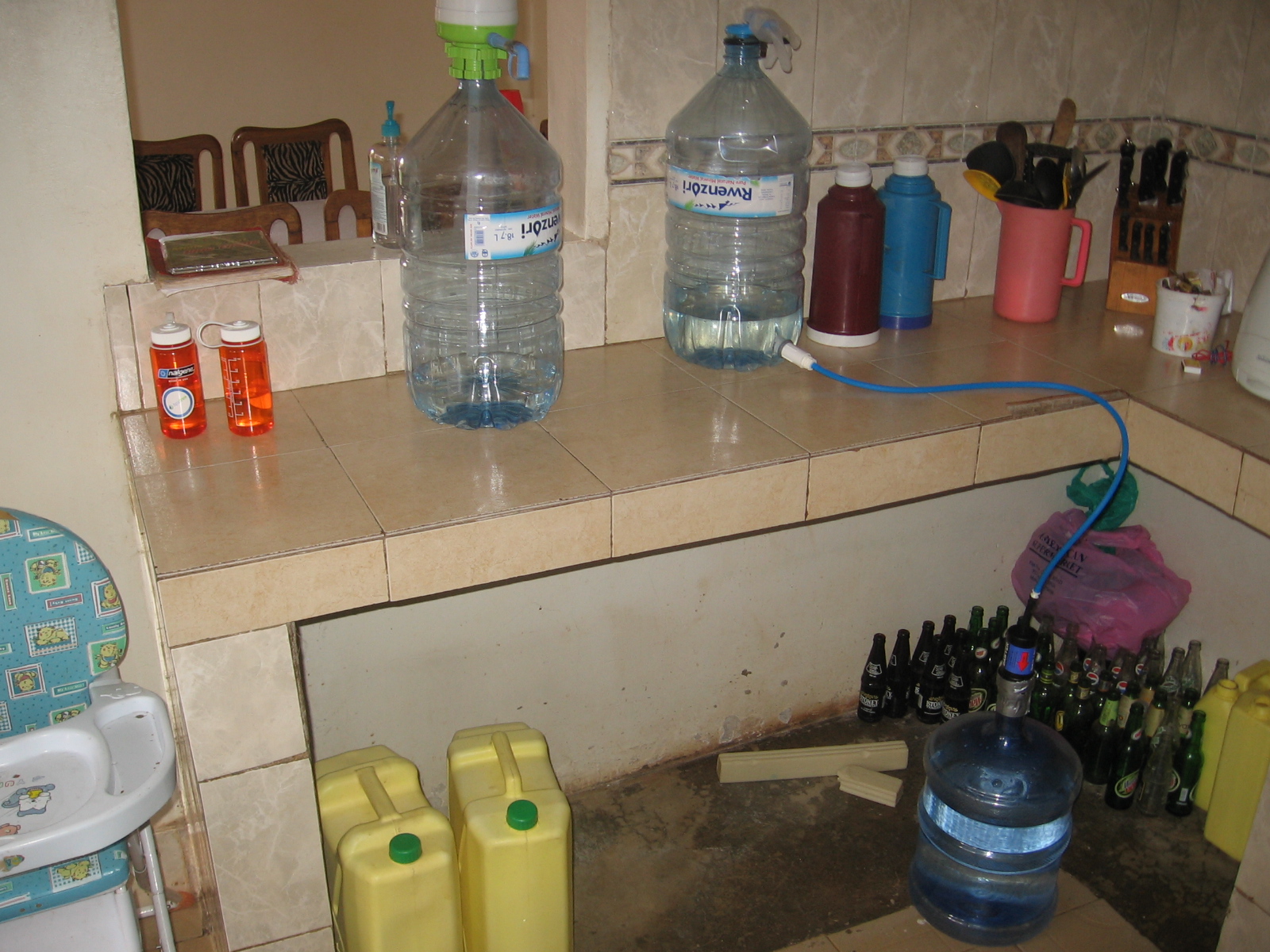
Water is always filtered, which I take care of.  We go through about 10 – 20 liters (3 – 5 gallons) of filtered water a day.  The Sperlings cleaned their water with Water Filtering Systemchlorine tablets, which works well.  We prefer to use a slow filtering system that I bought from Equip before leaving the US.  It does not leave a strong chlorine taste.  The water from the tap starts in the clear container on the counter to the right, then filters to the container on the floor, and then I pour the clean water into the clear container on the counter to the left – the one with the white & lime green hand pump.  Extra containers of water are in yellow jugs on the floor – sometimes we will chlorinate those if we are delayed on the filtering.

Meals here differ somewhat from our regular American diet.  Breakfast normally consists of a combination of two to three fresh fruits: either apples, bananas, pineapples, mangos, or papaya; toast, margarine, fruit jam, peanut butter and tea or coffee.  The kids drink hot tea for breakfast since juice is expensive.  Occasionally French toast is substituted for the toast and about once a week we eat hard boiled eggs.

Lunch almost always (except on Sundays) consists of: rice, flavored with hints of carrots, peppers and onion; posho (ground white corn that tastes a bit like grits and looks like cold grits); pinto beans with a bit of tomato; greens and/or a cabbage mixture, fresh avocado, and lukewarm water to drink.  This week we “broke bad” (Southern colloquialism meaning “to go wrong”) and ate mac and cheese and tuna on a dinner roll!!

Dinner consists of more variety such as African food like matooke (cooking bananas) with peanut sauce, rice, posho, breaded cassava (the third largest source of carbs in the world), Irish potatoes, French fries, greens, green beans, eggplant, guacamole, cabbage mixture, small portions of pork, home made spaghetti, fried eggs, chapatti wraps and water, soda (Coke products are readily available) or freshly squeezed passion fruit juice.  Dessert, when we have it, consists of 2 – 3 cookies per person, bought in a small pack at a grocery store.  On Sunday evenings, we have snacks at our Bible study or pancakes at home!  We did have chicken one night, which we bought alive for $7.00.  Ruth butchered it and prepared it for us, but there is not much meat on the bird.  On rare occasions ground beef can have bits of gravel in it to weight it down – amazing what some people will do for a little bit of more money.

Food (before we got the fridge this week) was left sitting out until it was all eaten.  Leftovers are not normally given to animals as that is culturally a “no-no.”

We have limited our intake of milk due to storage before we got the fridge.  We may start getting milk from a cow and boiling it.  Before this past Saturday we had ice once or twice since arriving here two months ago – that’s friends or when our pastor and his wife from Virginia had us over for homemade pizza and southern iced tea.  They have a large house, which hosts short-term mission teams.

One of our supporters sent us a DVD player with movies in a care package!!! They FedEx’d it and it arrived in 5 days.  We love it.  All movies here in the stores and on the streets are pirated, whether rentals or for sale.  Missionaries can bring their own movies, swap or sell them.

More Lifestyle Changes will be presented in future posts.